Mexico City: you have to start in the top three, and pole is not enough
F1 Legend Sim · Staff · 28 October 2026 · 4 min read
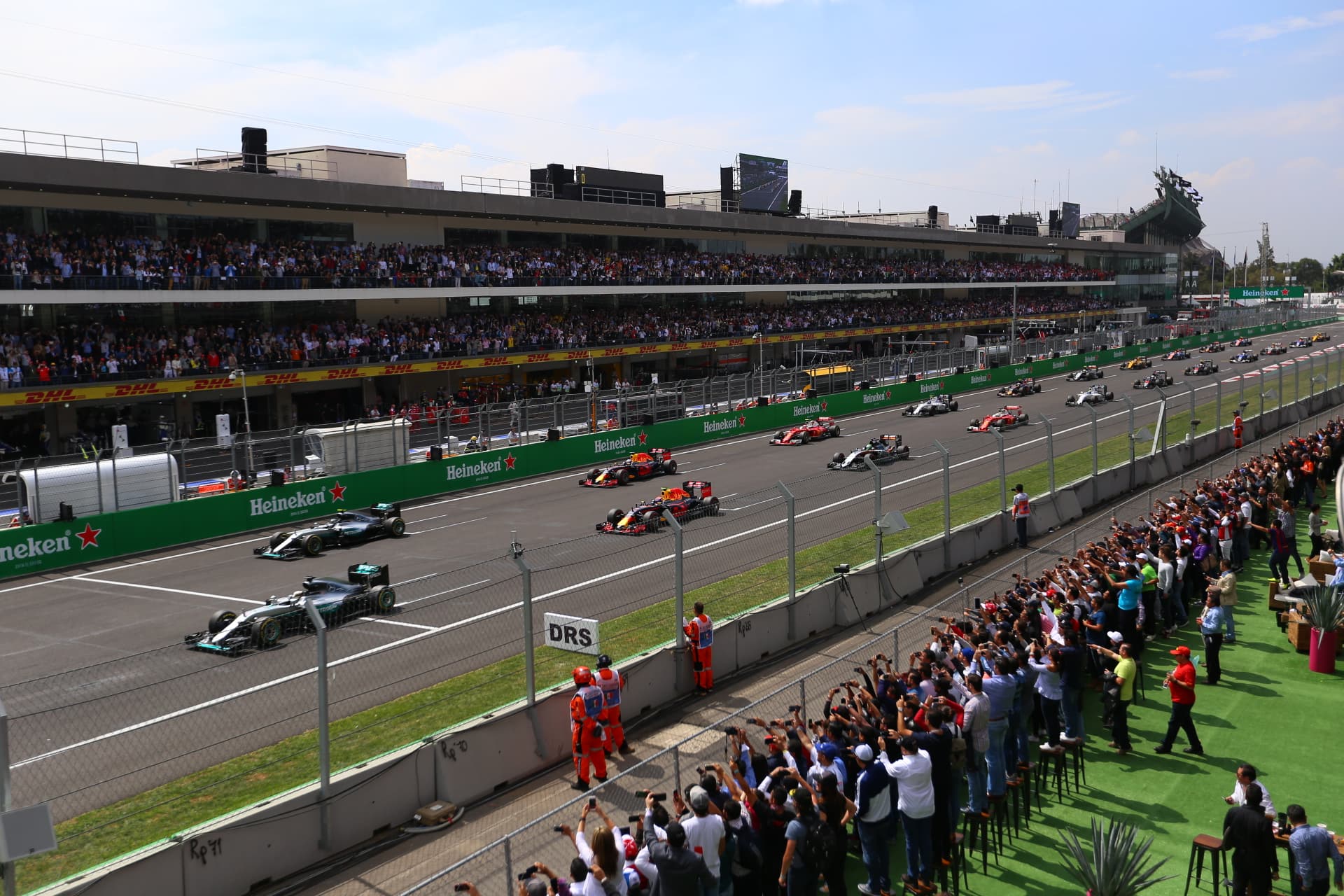
The Mexican Grand Prix has been held 25 times at the Autódromo Hermanos Rodríguez, and 22 of them were won by someone starting in the top three. The last driver to win it from further back was Alain Prost in 1990, from thirteenth. But starting first is no guarantee either: the polesitter wins only half the time, and when he loses, it is almost always on the first lap.
Start outside the top three and you do not win
Of those 25 races, pole won 12, second place 4 and third 6. Only three winners started further back: Denny Hulme in 1969 and Gerhard Berger in 1986, both from fourth, and Prost in 1990. There have been twelve more editions since, and nobody else.
This site's engine reaches the same place by another route. It has measured, circuit by circuit, how much grid position weighs on the result, calibrated against the real races from 2014 to 2025, and in that table Mexico City is third out of 30: only Monaco and Baku punish a poor start more. Austin, last week's race, was 26th.
But pole is not enough
What makes Mexico odd is what happens among the top three. Since it returned to the calendar in 2015, the polesitter was still leading at the end of lap one in only half the races. In the other half the leader had started second or third, and four of those five times it was Max Verstappen.
| Year | Pole | Leader after lap 1 | Winner |
|---|---|---|---|
| 2015 | Rosberg | Rosberg | Rosberg (started 1st) |
| 2016 | Hamilton | Hamilton | Hamilton (started 1st) |
| 2017 | Vettel | Verstappen (started 2nd) | Verstappen (started 2nd) |
| 2018 | Ricciardo | Verstappen (started 2nd) | Verstappen (started 2nd) |
| 2019 | Leclerc | Leclerc | Hamilton (started 3rd) |
| 2021 | Bottas | Verstappen (started 3rd) | Verstappen (started 3rd) |
| 2022 | Verstappen | Verstappen | Verstappen (started 1st) |
| 2023 | Leclerc | Verstappen (started 3rd) | Verstappen (started 3rd) |
| 2024 | Sainz | Verstappen (started 2nd) | Sainz (started 1st) |
| 2025 | Norris | Norris | Norris (started 1st) |
Compared with everywhere else, it is the second circuit where pole holds on least through lap one since 2012, behind only Austin, as we showed in the circuit where pole is least likely to survive lap one. There was no race in 2020.
Lap one decides it
And what happens on that lap is rarely undone. Whoever led at the end of lap one won eight of the ten races. The two exceptions were 2019, when Hamilton beat Leclerc on strategy, and 2024, when Sainz, who had lost the lead to Verstappen at the start, took it back on track.
Why it happens, and what we do not know
The usual explanation is the run from the grid, one of the longest of the season to the first braking point, at more than 2,200 metres above sea level. In such thin air the cars carry less downforce and less drag, the tow lasts longer, and the driver starting behind reaches turn one with the speed to dive down the inside. Our data does not measure that: it only says who was leading at the end of the lap and who won. The explanation fits, but it is an explanation, not a figure.
And it needs to be read with care: ten races is a small sample, and 2026 brings new cars. That pole suffers at the start in Mexico is what has happened since 2015, not a law.
For Sunday
This Sunday there is more at stake: Kimi Antonelli can seal the title, and only one very specific combination can stop him. The maths are in what Antonelli needs to be champion in Mexico. With the official grid we will publish the preview on Saturday with every driver's chances in the Grand Prix panel, and if you want to make your own call, Predict the GP lets you order the top ten before the race. The winners of all 25 editions are in the history of the Mexican Grand Prix.