F1 returns to Africa in Rwanda: the 24 races it already ran there, from Casablanca to Kyalami
F1 Legend Sim · Staff · 13 October 2026 · 8 min read
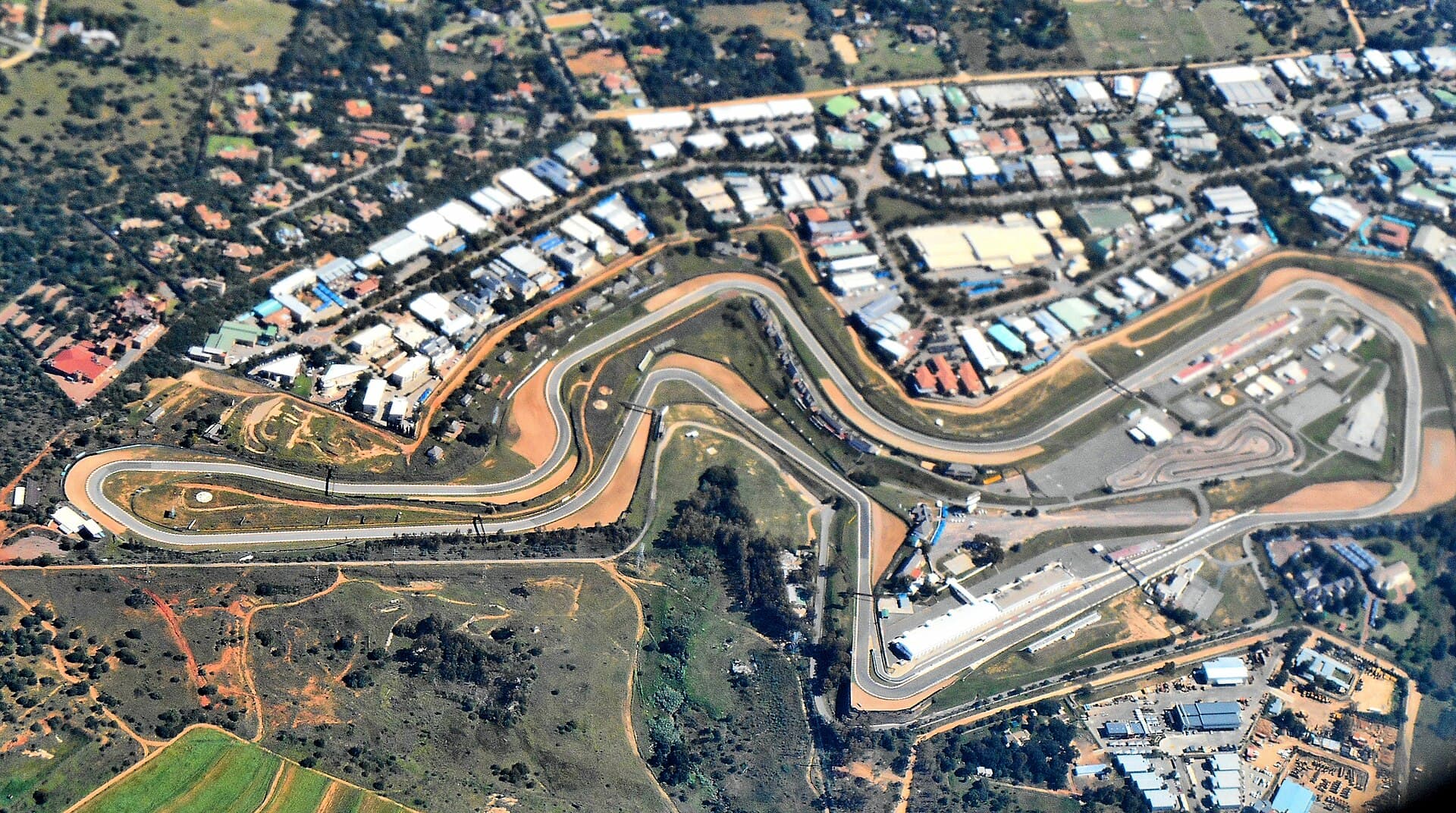
Formula 1 signed a ten-year deal in Kigali today to race in Rwanda. It will be its first race in Africa since 1993, when Alain Prost won at Kyalami. Before that the World Championship had visited the continent 24 times, in Morocco and South Africa: three titles were decided there, and Jim Clark took his last win there. We went through them one by one with our results database.
What was signed in Kigali
The announcement came this Tuesday, 13 October, in the Rwandan capital, with President Paul Kagame, Stefano Domenicali for Formula 1 and Mohammed Ben Sulayem for the FIA. The race will be called the Formula 1 African Grand Prix and the contract runs for ten years.
There is no date yet. The circuit still has to be built: it will sit in Bugesera, about 40 kilometres south of Kigali and next to the international airport going up there, and it is being designed by former driver Alex Wurz's company. Formula 1 talks about early next decade, and the specialist press gives 2030 as the earliest possible date, provided construction is finished in time. Kyalami had been linked with that return for years and never closed it.
Thirty-three years away, in numbers
The last African race was on 14 March 1993. From that day to Singapore last Sunday, the championship has held 633 Grands Prix in 30 countries. That is more than half of the 1,166 championship races in its whole history: Formula 1 has raced more times since it left Africa than in all the years before put together.
In that time the calendar added 12 new countries: Malaysia, Bahrain, China, Turkey, Singapore, the United Arab Emirates, South Korea, India, Russia, Azerbaijan, Qatar and Saudi Arabia. None of them African.
The grid is a different one too. Of the 23 drivers who have raced this year, only 5 had been born when Prost crossed the line at Kyalami: Alonso, Bottas, Hamilton, Hülkenberg and Pérez. Alonso was eleven.
Casablanca, 1958: a title by one point
The first championship race in Africa was also the only one in Morocco. It was held on 19 October 1958 at Ain-Diab, a road course on the outskirts of Casablanca, and it was the last of the year. Stirling Moss needed to win and set the fastest lap, with Mike Hawthorn no higher than third.
Moss did his part: he won in the Vanwall and took the fastest lap. But Phil Hill, Hawthorn's Ferrari team-mate, was running second, and the team asked him to let Hawthorn through. Hawthorn finished second and became champion by one point, 42 to 41, with a single win all year against four for Moss.
The race also cost a life. The engine in Stuart Lewis-Evans's Vanwall failed on lap 41, the car left the road and caught fire. He got out on his own, badly burned, and died six days later in England. Morocco never returned to the calendar.
East London: a championship lost to an oil leak
South Africa joined the championship on 29 December 1962, again as the final race and again with the title open. Graham Hill arrived nine points ahead of Jim Clark, but since only the best five results counted, a win was enough for Clark. He started from pole and led comfortably until an oil leak stopped him twenty laps from the end. Hill won the race and the championship.
Clark made up for it in the next two editions, both from pole. The 1963 race closed a year in which he won seven of the ten rounds. The other was held on 1 January 1965: it was meant to be the last race of 1964, slipped a week and ended up opening the following season. Jackie Stewart made his debut that day and finished sixth.
East London was also the race of the home drivers. In 1962, 7 South Africans and Rhodesians (from what is now Zimbabwe) took the start among the 17 cars, and a year later there were 8, nearly all of them in private entries.
Kyalami: twenty races at 1,500 metres
In 1967 the race moved to Kyalami, a fast circuit outside Johannesburg, about 1,500 metres above sea level. It never moved again.
The first one was nearly won by a local driver in a private car. John Love, a Rhodesian, took the lead in a four-cylinder Cooper when Denny Hulme pitted, and seven laps from the end he had to stop himself. Pedro Rodríguez won, his first victory and the first for Mexico, and Love finished second. It was also Cooper's last win in Formula 1.
A year later, on 1 January 1968, Jim Clark won his 25th race there and passed Juan Manuel Fangio's record of 24. He never started another Grand Prix: he died three months later in a Formula 2 race at Hockenheim.
Through the seventies, Kyalami was the early-season race where things happened for the first time. Mario Andretti won in 1971 on his Ferrari debut, and it was his first victory. Carlos Reutemann took his there in 1974. In 1973 Jackie Stewart won from sixteenth on the grid, and in 1978 Ronnie Peterson did it from twelfth, getting the better of Patrick Depailler on the last lap.
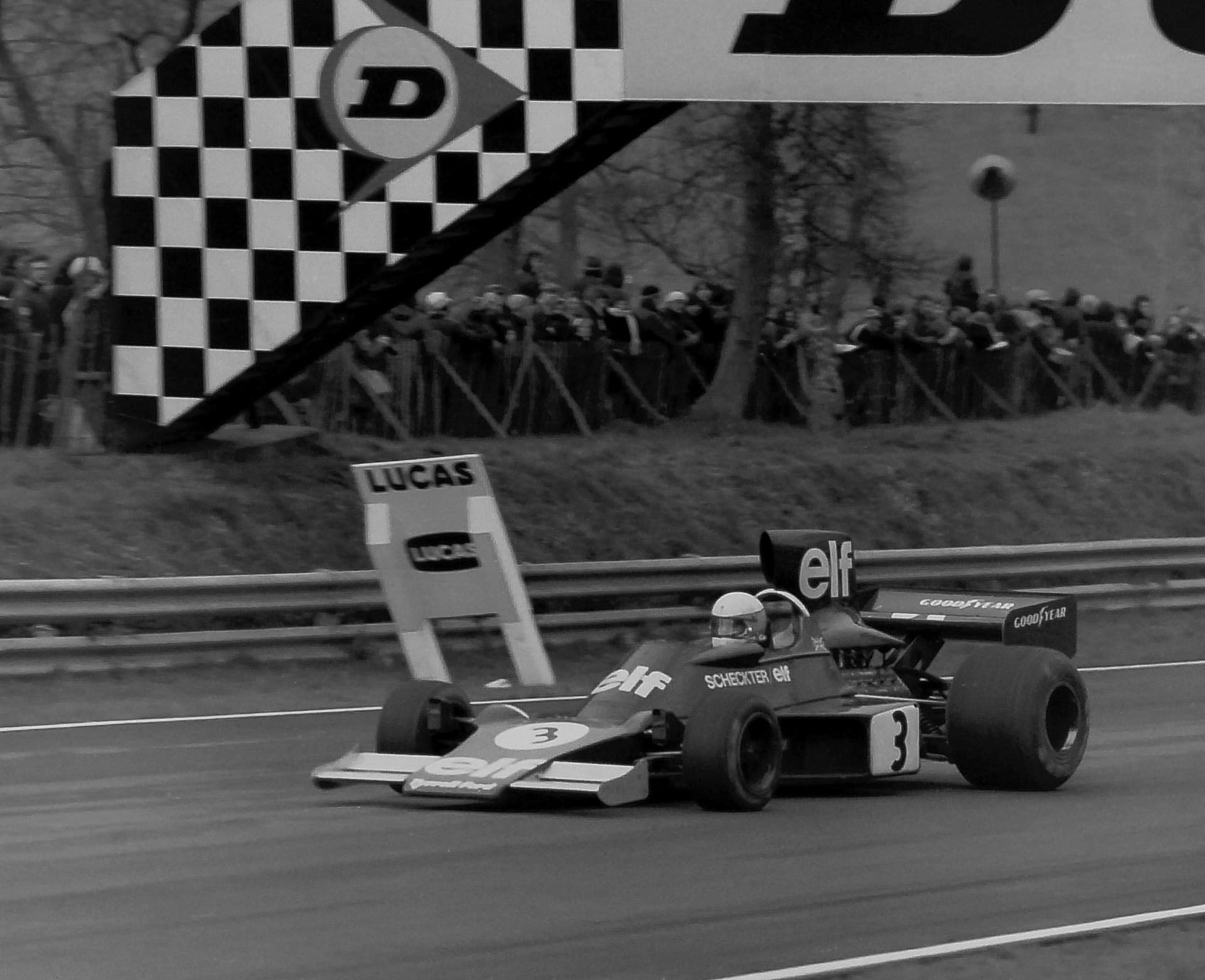
In 1975 Jody Scheckter won in a Tyrrell. He is still the only African driver to have won a Grand Prix in Africa, and four years later, with Ferrari, he became the only world champion the continent has produced.
Kyalami was a hard place as well. In 1973 Mike Hailwood pulled Clay Regazzoni out of his burning car after the two collided on the third lap, and was awarded the George Medal for it. In 1974 Peter Revson was killed in testing before the race. And in 1977 Tom Pryce hit Frederik Jansen van Vuuren, a 19-year-old marshal who was crossing the track with a fire extinguisher to reach another car. Both died.
The last years had more politics than racing. The 1981 edition was run, but in the middle of the war between the federation and the teams it was left out of the championship, which is why it is not among the 24. In 1982 the drivers went on strike before the race, led by Niki Lauda and Didier Pironi, over the terms of the new superlicence; a deal was reached at the last minute and Alain Prost won after making up more than a lap lost to a puncture. And in 1983 Kyalami closed the year with the title open once more: Prost arrived two points ahead of Nelson Piquet, retired with a broken turbo, and third place was enough for Piquet to be champion by those same two points.
1985: the race half the paddock did not want to run
In July 1985 the South African government had declared a state of emergency and international pressure against apartheid was growing. Renault and Ligier, the two French teams, did not travel, in line with their government. Several countries tried to stop their drivers from racing and some sponsors asked for their names to be taken off the cars. 20 cars took the start.
Nigel Mansell won from pole, in a Williams one-two. Days later the federation announced that the race would not be on the 1986 calendar.
1992 and 1993: the short return
Formula 1 came back in 1992, with apartheid being dismantled, to a rebuilt Kyalami that kept little of the old layout. Mansell won again, from pole and leading every lap, at the start of his championship year.
In 1993 the winner was Prost, back after a year out, ahead of Ayrton Senna. Sauber made its debut that day and scored with JJ Lehto's fifth place. After that the race promoter ran into financial trouble, the circuit changed hands and the Grand Prix was not renewed.
What the 24 say together
Starting first was worth less there than elsewhere. Of the 24 races, pole won 6, or 25%. Across the whole championship in those same years, 1958 to 1993, it won 177 of 481, or 37%. How much grid position weighs at each circuit today is something we measured in what starting first is worth.
Nobody owned the place either: 17 different winners in 24 races. Clark and Lauda won three times each, and Prost, Stewart and Mansell twice. On 9 occasions it was the first race of the year and on 4, the last.
And the home drivers faded away. Between 1962 and 1980, 20 of them took the start, 18 South Africans and 2 Rhodesians, and they reached the podium 5 times: Tony Maggs in 1962, John Love in 1967 and Scheckter three times. The last to start was Scheckter himself in 1980, with Ferrari. In the 6 races that remained there were none.
| Year | Circuit | Winner | Team | Started | Round |
|---|---|---|---|---|---|
| 1958 | Ain-Diab | Stirling Moss | Vanwall | 2 | 11 of 11 |
| 1962 | East London | Graham Hill | BRM | 2 | 9 of 9 |
| 1963 | East London | Jim Clark | Lotus-Climax | pole | 10 of 10 |
| 1965 | East London | Jim Clark | Lotus-Climax | pole | 1 of 10 |
| 1967 | Kyalami | Pedro Rodríguez | Cooper-Maserati | 4 | 1 of 11 |
| 1968 | Kyalami | Jim Clark | Lotus-Ford | pole | 1 of 12 |
| 1969 | Kyalami | Jackie Stewart | Matra-Ford | 4 | 1 of 11 |
| 1970 | Kyalami | Jack Brabham | Brabham | 3 | 1 of 13 |
| 1971 | Kyalami | Mario Andretti | Ferrari | 4 | 1 of 11 |
| 1972 | Kyalami | Denny Hulme | McLaren | 5 | 2 of 12 |
| 1973 | Kyalami | Jackie Stewart | Tyrrell | 16 | 3 of 15 |
| 1974 | Kyalami | Carlos Reutemann | Brabham | 4 | 3 of 15 |
| 1975 | Kyalami | Jody Scheckter | Tyrrell | 3 | 3 of 14 |
| 1976 | Kyalami | Niki Lauda | Ferrari | 2 | 2 of 16 |
| 1977 | Kyalami | Niki Lauda | Ferrari | 3 | 3 of 17 |
| 1978 | Kyalami | Ronnie Peterson | Lotus | 12 | 3 of 16 |
| 1979 | Kyalami | Gilles Villeneuve | Ferrari | 3 | 3 of 15 |
| 1980 | Kyalami | René Arnoux | Renault | 2 | 3 of 14 |
| 1982 | Kyalami | Alain Prost | Renault | 5 | 1 of 16 |
| 1983 | Kyalami | Riccardo Patrese | Brabham | 3 | 15 of 15 |
| 1984 | Kyalami | Niki Lauda | McLaren | 8 | 2 of 16 |
| 1985 | Kyalami | Nigel Mansell | Williams | pole | 15 of 16 |
| 1992 | Kyalami | Nigel Mansell | Williams | pole | 1 of 16 |
| 1993 | Kyalami | Alain Prost | Williams | pole | 1 of 16 |
When Bugesera hosts its race it will be the championship's 25th in Africa and the first in a third country. Until then, in What If? you can run the 1993 season, the last one that started at Kyalami, with any grid you like. And if returning circuits are your thing, two weeks ago we told the story of Sepang coming back nine years on.